

Author Archives: Samuel Edwards


The Future of PR in a Cookieless World
Public relations has always been the art of building attention without burning trust. The web made that art faster, stranger, and sometimes nosier. Now third-party cookies are fading, and many teams feel like the lights just flickered in a crowded newsroom.
Relax. This shift does not end persuasion or storytelling. It simply changes how we find audiences and prove impact. For practitioners working in Digital PR, the path forward favors consent, creativity, and measurement that respects people as people.
Why Cookies are Crumbling
Third-party cookies followed people across sites, stitched together behavior, and promised precision. Over time, users, regulators, and platforms questioned the trade. What began as convenience started to feel like surveillance.
Major browsers responded by blocking or limiting tracking, and platforms are moving audience signals closer to the device. The direction is clear. The web is rebalancing in favor of privacy and control. Communicators must rebalance with it. The message is not retreat, it is redesign.
| Factor | Explanation |
|---|---|
| User Privacy Concerns | People grew wary of invisible tracking across sites. What started as personalization began to feel invasive, sparking pushback from users and regulators. |
| Regulatory Pressure | Privacy laws like GDPR and CCPA demanded transparency, consent, and data control—forcing companies to rethink old tracking methods. |
| Platform and Browser Changes | Major browsers such as Safari, Firefox, and Chrome have restricted or are phasing out third-party cookies to protect user data. |
| Industry Shift Toward Privacy | The web is moving toward privacy-first practices, emphasizing consent, transparency, and ethical audience measurement instead of surveillance. |
What Comes After Tracking
There is no single heir to the cookie. Instead, the future looks like a toolkit. Some tools protect privacy by design, some rely on context, and others require collaboration between publishers and brands. The right mix depends on your audience, your channels, and your risk tolerance.
Privacy Sandboxes and Aggregation
Several platforms are testing ways to keep sensitive data on the device while allowing aggregated targeting. You do not learn who someone is, but you can still reach groups with shared interests. That means less precision and more incentive to craft messages that travel on their own merit.
Clean Rooms and Secure Collaboration
Data clean rooms let two parties compare audience overlaps without exchanging raw files. Think of it as speaking through a translator who only delivers safe summaries. For communications, this supports smarter amplification without peeking at personal details.
First-Party Data Becomes a Core Asset
If third-party data drifts away, your own touchpoints matter more. Treat sign-ups, communities, webinars, and events as a living laboratory. The goal is to build a value exchange that feels fair. Ask for minimal information, explain why you need it, and always give something useful in return. When people volunteer preferences, you gain insight with consent attached.
Designing a Better Value Exchange
Short forms convert. Clear promises earn trust. If someone subscribes, send welcome notes that teach them something quickly. If you invite feedback, keep the survey short enough to finish with a cup of coffee. Every interaction should feel like a helpful conversation, not a data harvest.
Enrichment Without the Ick
You can enrich profiles respectfully. Track on-site interactions with transparent notices. Invite readers to pick topics. Run small pulses that ask one thoughtful question at a time. Over months, you will have a rich picture of what your audience cares about, collected in a way that makes people comfortable.
Context Regains Its Crown
When behavioral breadcrumbs become scarce, context carries more of the load. Where your message appears, what surrounds it, and how it reads on that page now influence outcomes as much as the audience segment.
Stronger Publisher Partnerships
Work directly with outlets your audience already trusts. Contribute guest essays that feel native to the publication. Support packages that include editorial guidance, not just a rectangle of pixels. Watch time on page, scroll depth, and return visits. These indicators reveal whether the story earned attention.
Search and Discovery Fundamentals
Search remains the crossroads of curiosity. In a cookieless landscape, technical hygiene will power many wins. Use descriptive titles, fast pages, and structured data that helps engines interpret your content. Earn links by publishing ideas that people want to cite.
Measurement Without the Creep
Perfect user-level attribution will be rarer. That is not a tragedy. It is an invitation to upgrade how we measure.
From Last Click to Lift
Shift the story you tell from credit assignment to impact estimation. Use pre-post comparisons, holdout regions, and media mix modeling to understand lift. These methods trade some granularity for reliability.
Event-Based Analytics on Owned Properties
On your sites and apps, instrument events that map to meaningful actions. Define clear conversions, keep your taxonomy tidy, and make dashboards understandable at a glance.
Trust, Consent, and Brand Safety
Trust is no longer a hygiene factor. It is the strategy. When tracking fades, trust becomes the currency that buys time and attention.
Plain Language, Real Choices
Write privacy notices like you would explain a recipe to a friend. Use short sentences. Put the settings where people expect to find them. Let them change their minds easily. The more control users have, the more comfortable they feel sticking around.
Signals People Can See
Demonstrate integrity in ways that are visible. Honor unsubscribe requests immediately. Respect frequency caps. Moderate comments to keep conversation civil without turning it sterile. Publish accessibility commitments and follow through. These choices travel by word of mouth, and they add up.
Creativity as a Force Multiplier
Tactics may lose a little precision, which means ideas must do more lifting. That is excellent news for communicators who like to write and think.
Narrative Design That Endures
Define a few durable storylines that connect your mission to real human concerns. Revisit them often. Build modular content that fits many channels without sounding copy pasted. A crisp hook, a vivid image, and a useful takeaway will still beat a thousand retargeted nudges.
Human Voices Beat Corporate Echoes
Let experts speak like humans. Encourage leaders to use their own cadence. Keep quotes concrete and short. If a sentence sounds like it was assembled by committee in a fluorescent room, cut it until it breathes.
The Modern PR Stack
Your technology will change shape. You will retire tools that depended on third-party identifiers and invest in platforms that unify first-party signals, audience research, and editorial planning.
Identity, Consent, and Interoperability
Choose systems that capture consent at the point of interaction, store it securely, and share it across channels without turning messy. Ask vendors how deletion works, how access is audited, and how they handle edge cases. Boring answers are good answers.
Right-Sized Automation
Machine help can speed outlines, summarize coverage, and flag anomalies. Keep humans in charge of facts, tone, and sensitive topics. Use automation to suggest variations, not verdicts. Treat it like a fast intern who still needs an editor.
Team Skills For The Next Decade
The future belongs to communicators who mix empathy with analysis. The job gets more interdisciplinary, but the center stays the same.
Data Literacy For Communicators
You do not need to build models, but you should be comfortable reading them. Learn enough statistics to ask sharp questions about tests and lift. Get curious about how dashboards are built and what assumptions they hide. Treat data as a conversation partner, not a judge.
Editorial Courage With a Smile
Audiences can sniff out fluff from a tab away. Say something worth their time. Own mistakes, explain fixes, and move on. Curiosity, humility, and a bit of wit will travel further than any audience graph built on vanishing cookies.
Conclusion
The cookieless world is not a plot twist where communications fades to black. It is a return to fundamentals, paired with cleaner data habits and better manners. Teams that invest in consent, context, and creativity will not miss the old chase across the open web. They will publish ideas that people remember, forge partnerships that make sense, and measure impact with methods that stand up to questions.
Keep your language plain, your dashboards honest, and your promises small enough to keep. Respect attention, deliver value quickly, and invite long-term relationships. Do that, and the future of PR reads less like a warning and more like an invitation.




Top Digital PR Trends to Watch in 2025
A year ago, publicists were still wondering whether artificial intelligence could even write a halfway-decent press release; now it is elbowing its way into every newsroom inbox on Earth. As 2025 barrels forward, professionals who manage Digital PR know the rules have changed again, and the stakes involve privacy laws, skeptical audiences, and algorithms that never sleep.
To keep campaigns from rusting in yesterday’s toolbox, let’s unpack the forces reshaping earned media this year and explore why a clever pitch is only the opening act for deeper, data-driven storytelling that audiences can actually trust.
AI-Powered Personalization Becomes the Default
Generative tools are no longer fringe gadgets. Most communicators already use large-language-model assistants for brainstorming, first drafts, and sentiment checks. The new frontier is hyper-tailored outreach that tweaks tone, format, and timing for individual reporters and micro-communities rather than one broad blast because algorithms can cross-reference browsing patterns, past coverage, and social behavior in real time.
The win goes to teams that combine machine suggestions with human nuance, catching typos the bots miss and pruning out tone-deaf phrases before hitting “send.”
Smarter Media Monitoring
Advanced engines flag changes in a journalist’s beat minutes after they occur, letting practitioners pivot angles long before a briefing call is canceled, which protects relationships and prevents blind-spot embarrassments.
Predictive Pitching
Statistical models map how similar stories performed, allowing teams to test multiple headlines and quotes to forecast pickup potential. That foresight saves hours otherwise spent on guesswork and improves hit rates.
Human Oversight Remains Vital
Automation can generate quotes, but only a flesh-and-blood professional knows whether an executive would actually say them. Skilled communicators still place final eyes on every element to preserve authenticity and tone.
| Key Trend | Summary |
|---|---|
| Generative AI Integration | PR teams now use AI tools for brainstorming, drafting, and sentiment checks as a standard step in campaign planning. |
| Hyper-Tailored Outreach | Messages are customized for individual journalists, micro-communities, and platforms—moving away from mass pitching. |
| Real-Time Personalization | Algorithms analyze past coverage, browsing patterns, and social behavior to optimize tone, format, and timing. |
| Human Oversight | Communicators review and refine AI output—catching tone-deaf language and ensuring authentic voice before sending pitches. |
Social Listening Evolves Into Real-Time Reputation Insurance
A single post can ignite public outrage before breakfast. Modern listening dashboards no longer just catalog mentions; they predict the velocity and direction of chatter. By identifying tiny spikes in negativity, brands can course-correct while the issue is small enough to handle with empathy instead of legal statements.
Anticipatory Alert Systems
AI co-pilots transform basic keyword triggers into context-rich notifications that explain why a conversation matters, not merely that it exists, arming teams with story-saving context at crunch time.
Disinformation Defense
False narratives often travel faster than corrections. Practitioners now craft “pre-bunk” content—facts published proactively so rumors starve before they trend, keeping brand narratives on-track and grounded.
Community-Led Corrections
Empowered advocates and fans frequently jump into comment threads to clarify facts, provided the brand has earned their trust through transparency, prompt replies, and ongoing two-way dialogue.
Authenticity and Accuracy Trump Virality
Clickbait had a good run, but modern audiences can smell manufactured hype a mile away. Surveys show that consumers expect brand statements to feel personal, timely, and genuine; when credibility slips, they swipe away without guilt.
Purpose-Based Narratives
People respond to clear values, not corporate platitudes. Messaging that aligns with mission—whether environmental stewardship or accessible design—lands stronger coverage and builds resilience during missteps.
Micro-Influencer Credibility
Smaller creators speak to niche audiences with language insiders recognize. Their shout-outs feel like friendly recommendations and deliver higher trust than mega-celebrity endorsements.
Values-Focused Press Materials
Reporters now request evidence of social impact, carbon footprints, or inclusivity stats before agreeing to interviews. Supplying transparent data up front streamlines approval cycles and signals confidence.
Immersive Storytelling Takes Center Stage
Press releases once relied on static quotes, but immersive experiences are rewriting the playbook. Augmented and virtual reality demos let journalists walk through a product launch from their sofa, turning coverage into first-person adventure. This approach transforms plain text into share-worthy reels, interactive features, and short-form videos that hook both news desks and social algorithms.
AR Launches and VR Press Rooms
From holographic teardowns to 360-degree factory tours, spatial media generates visceral impressions that words alone cannot match. The tactic sparks richer reportage and extends a brand’s creative footprint.
Multi-Sensory Content Packages
High-resolution renders, ambient soundscapes, and behind-the-scenes commentary now ship in one tidy press kit, ready for repurposing across channels without diluting narrative focus.
Live Streaming With Two-Way Dialogue
Broadcast platforms add live Q&A widgets so audiences can ask follow-up questions in real time, adding spontaneity and reducing spin while keeping journalists engaged.
Data Privacy and Ethical Outreach Move to the Forefront
Regulators continue tightening rules around third-party cookies, fueling a scramble for ethical data collection. Future-proof campaigns build first-party datasets through opt-in newsletters, loyalty apps, and gated resources. Respectful collection methods foster goodwill and dodge costly fines.
The Cookie-Lite Future
As browsers phase out tracking tech, context becomes king. Placement strategies now lean on topic relevance and audience intent rather than covert fingerprints, demanding sharper creative alignment.
Consent-Based Outreach
Clear language, short forms, and obvious exits make audiences more willing to share details voluntarily, transforming compliance into a service feature rather than a grudging afterthought.
Measurement Transparency
Stakeholders want to know how success metrics reflect real-world impact. Breaking dashboards into easy-to-grasp summaries reassures executives that numbers are rooted in ethical practices.
Creator Collaborations Rewrite the Media List
Influencers are not fading; they are diversifying. Partnerships extend beyond sponsored posts to co-developed products, limited-edition drops, and shared narrative arcs. These collaborations blur the line between media hit and merchandise launch, amplifying reach and revenue simultaneously.
Nano-Influencer Power
Creators with fewer than ten thousand followers often yield higher engagement because their communities feel like group chats, not broadcast networks, giving brands a direct line to niche enthusiasm.
Cross-Platform Story Seeds
A single teaser on a social-first platform snowballs into video explainers, newsletter deep dives, and community AMAs, multiplying touchpoints without feeling repetitive or forced.
Shared IP Campaigns
Brands and creators negotiate equitable splits on joint ventures, turning once-off sponsorships into evergreen revenue streams and elevating both parties to stakeholder status rather than mere partners.
Sustainability and Social Impact Become Baseline Expectations
Environmental, social, and governance commitments have shifted from “nice to have” to baseline requirements. Journalists increasingly refuse to cover announcements that ignore climate realities. Communicators who integrate sustainability milestones into core messaging find reporters receptive and audiences cooperative.
Climate Metrics in Releases
Including concrete numbers—offset tons, recycled materials—signals sincerity and arms reporters with hard facts for their copy.
Supply Chain Candor
Acknowledging weak spots before critics do demonstrates maturity and invites collaborative problem-solving, turning potential scandals into trust-building moments.
Impact Reporting Cadence
Regular updates prevent one-time announcements from gathering dust and reassure supporters that efforts continue beyond press day, cultivating long-term goodwill.
Conclusion
The loudest insight of 2025 is that novelty alone no longer guarantees headlines. Audiences crave candor, reporters crave precision, and algorithms reward relevance over noise. Successful practitioners will fuse smart technology with sharper ethics, wrap narratives in immersive formats, and nurture communities that eagerly carry the story forward. Master these trends now, and you will stride into 2026 with a contact list full of allies, a dashboard brimming with meaningful metrics, and a grin that says you saw the wave before it broke.

How to Use HARO and Qwoted for Free Digital PR Wins
Journalists are on permanent deadline and your brand stories are itching to escape the marketing department, yet paid placement fees can maul even the bravest budget. Enter two under-appreciated matchmakers—Help A Reporter Out (HARO) and Qwoted—that allow clever communicators to land real media coverage without cracking open the wallet. They turn inbox bravery into bylines, creating the kind of Digital PR sparkle that reminds your CEO why you’re on payroll. Ready? Let’s charm reporters, one free query at a time.
Why Journalists Crave Expert Commentary
Reporters live by the mantra “quotes or it didn’t happen.” They need colorful human voices to turn data into drama and prevent every article from sounding like a tax form. If you hand them crisp expertise, relatable anecdotes, and a sprinkle of wit, you become a treasured contact instead of yet another inbox gremlin. Think of the relationship like a beach bonfire: you supply the wood, they light the match, and readers gather around the finished story for warmth. Feed that fire consistently and it will roar whenever your subject-matter knowledge is needed.
Getting Started With HARO and Qwoted
Signing Up Without Spraining Your Wallet
Both platforms believe in democratized publicity. Basic accounts are free and take less time to set up than your morning coffee. Provide a professional email, a short bio that doesn’t read like your résumé copied-and-pasted, and strict topic preferences. That last step is pure gold—picking relevant beats ensures you receive fewer but better queries, reducing the risk of missing a gem while scrolling past kitchen-sink noise.
Fine-Tuning Your Source Profile
Your profile is a dating app bio for journalists. Showcase credentials, cite impressive results, and hint at a personality people actually want to interview. One sentence that sneaks in a hobby—“I once rebuilt a vintage Vespa after watching too much Italian cinema”—helps writers remember you when a lifestyle angle pops up. Keep it under 150 words; wandering manifestos scare editors.
Spotting the Golden Queries
Daily digests can feel like drinking from a fire hose, so apply ruthless filters. Scan sender outlets first. National newspapers and niche trade magazines usually outrank anonymous blogs. Then check deadlines; many expire within hours, so quick reflexes matter more than dripping brainpower over a perfect draft that arrives late. Bookmark or star promising requests before drafting responses to avoid inbox black holes.
Crafting a Pitch That Reporters Actually Read
Open With a Mic-Drop Subject Line
Subject lines should perform stand-up comedy in ten words or fewer. Lead with authority and intrigue—“Behavioral Economist Dissects Black Friday Panic Buying.” Every capitalized character counts. Avoid click-bait tropes; seasoned writers can smell marketing cologne from the screen.
Prove You’re the Unicorn, Not Another Horse
First sentence: establish expertise. Second sentence: translate that expertise into a benefit for readers. Third sentence: preview your quotable insight. Example: “As a former NASA propulsion engineer, I can explain why electric scooters stall on rainy hills and how cities can fix it.” Credentials, relevance, promise—all boxed up tighter than a gift wrap.
Trim the Fluff Faster Than a Barber
Journalists skim. Use short paragraphs, specific numbers, and analogies that snap like bubble wrap. Replace “I believe someone might consider” with “Customers binge-watched 300 hours of video during launch week.” Offer two to three pithy quotes they can drop straight into copy. Sign off with contact info and optional supporting links but avoid attachments that trigger spam filters.
Timing and Follow-Up: The Secret Sauce
Respond Before Your Coffee Cools
Speed wins. For high-authority outlets, aim to reply within one hour. Keep templates handy—intro, credentials, evergreen stats—so you only customize the meaty quote section. If you’re a night owl, schedule inbox alerts during peak query drops at 5 a.m. and 1 p.m. Eastern Time.
Nudges That Don’t Feel Like Spam
If silence greets your pitch after 48 hours and the deadline hasn’t passed, send a polite follow-up. Reference the original subject line, add one fresh nugget, and wish the writer luck on their story. If they still ghost you, shrug and move on. Media karma remembers persistence but punishes pestering.
Measuring Your Wins and Leveling Up
Track Mentions Like a Treasure Hunter
Set Google Alerts for your name, brand, and unique phrases from your quotes. Pair them with a simple spreadsheet that notes publication, date, domain rating, and backlink status. Watching the list grow is the grown-up version of collecting trading cards.
Turn One Quote Into Ten Backlinks
Repurpose published mentions. Share on social channels, embed in your newsroom page, and slip into future pitches as social proof: “Recently quoted in The Chicago Tribune on supply chain hiccups.” Each placement becomes jet fuel for the next one, building authority snowball-style.
Cultivate Long-Term Media Friendships
Reply to every thank-you note. Offer extra data or visuals if the journalist needs follow-up. Engage with their articles on social media. Congratulations—they will think of you the next time a tight deadline looms. Over months, cold outreach evolves into warm conversation, and that’s when opportunities start arriving unprompted.
| Step | Action |
|---|---|
| Track Mentions | Use Google Alerts and a simple spreadsheet to log media coverage and backlinks. |
| Repurpose Wins | Share placements on social, add to your site, and reuse quotes in future pitches. |
| Build Relationships | Follow up, engage with journalists, and turn cold outreach into ongoing coverage. |
Avoiding Common Pitfalls
Spray-And-Pray Pitching
Blasting generic responses to every query is the fastest road to spam folder purgatory. Tailor or trash—it’s that simple. Rather than gambling on volume, sharpen your relevance radar so each email lands with sniper precision.
Overselling and Under-Delivering
Claiming you’ve “revolutionized an industry” invites fact-checking daggers. Stick to verifiable achievements, be transparent about data sources, and never promise exclusivity you cannot grant. Credibility lost is harder to recover than a deleted manuscript.
Forgetting the Human on the Other Side
Behind every press badge is a person juggling multiple stories, an editor’s glare, and caffeine depletion. A dash of empathy goes miles. Open with a friendly greeting, respect their time, and never treat them like a service vending machine.
Conclusion
HARO and Qwoted are not silver bullets but sparkling slingshots that let underdogs land headline-level wins without throwing cash at sponsored content. By mastering swift sign-ups, laser-focused pitch craft, and genuine relationship building, you transform scattered inbox queries into an evergreen pipeline of media mentions. Keep your wit sharp, your facts sharper, and your follow-through flawless—the spotlight is only one well-timed email away.
The Anatomy of a Successful Digital PR Campaign
In the crowded online bazaar of tweets, think-pieces, and 30-second reels, brands that earn genuine attention have mastered one craft: Digital PR. Pulling it off is part science, part art, and a smidge of theatrical flair. Below, we break down every muscle, tendon, and nerve of a top-flight campaign so you can build your own headline-snatching Frankenstein—minus the bolts in the neck.
Laying the Strategic Foundation
Setting SMART Objectives
Before a single press list is drafted, nail down goals so clear you can tattoo them on your forearm. “Increase branded search traffic by 30 percent in six months” works; “Get famous soon” does not. Precise targets give the team a rallying cry, shape the budget, and later decide whether champagne or black coffee gets poured.
Audience Persona Deep Dive
Picture the exact humans you want talking about you. What podcasts do they binge? Which newsletters pop up in their inbox at 6 a.m.? Build personas with quirks and frustrations, not bland demographics. A campaign aimed at “marketing decision-makers” sounds like a robot wrote it. Target “Crystal, the caffeine-powered CMO who hates jargon but loves benchmarks,” and suddenly the creative sparks.
Competitive Landscape Check
Every industry has that loud neighbor hogging column inches. Audit recent coverage to see who’s winning, what angles journalists devoured, and where fatigue is creeping in. Spotting the gap—maybe an underserved niche, perhaps a contrarian stance—lets your story slide into inboxes looking refreshingly different.
Crafting an Irresistible Story
Finding the Hook
Reporters wake up to inboxes fuller than Times Square on New Year’s Eve. A hook must pass the “So What?” test. Tie your narrative to a cultural moment, surprising data, or a bold prediction. Give editors the joy of feeling first—first to spot a trend, first to coin a term, first to explode a myth.
Data as a Narrative Spine
Statistics are storytelling cheat codes. Commission a survey, mine first-party analytics, or partner with a research firm. Raw numbers become headlines: “Only 12 Percent of Gen Z Trust Traditional Ads” writes itself. Visualize findings in a clean chart, and you gift journalists ready-to-embed eye candy.
Timing the Reveal
Even the juiciest scoop dies in a holiday news drought. Map industry events, economic calendars, and quirky observances (hello, National Coffee Day) to time your drop. Pitching a cybersecurity piece? Land it during Cybersecurity Awareness Month when editors crave relevant angles.
Building the Media Outreach Machine
Targeted Journalist Shortlist
Spray-and-pray is for sprinklers. Curate a shortlist of writers whose last three pieces feel eerily similar to your theme. Read their bylines, learn their beat changes, and respect their pitching preferences. A well-researched list of twenty will outperform a bought database of two thousand any day.
Pitch Personalization Secrets
Address the journalist by name, reference a recent article, and bridge to your angle in the first two sentences. Keep the email shorter than a smartphone screen—nobody scrolls seven swipes for buried treasure. Attach the press release only if requested, and embed the key stat or quote in the body where it can scream louder.
Follow-Up Without the Stalk Factor
Journalists expect a reminder, not a digital shadow. A polite nudge two business days later is fair play. If silence persists, shift angles or try a new contact rather than pinging “Just checking in” until the heat death of the universe.
Amplifying Across Owned and Earned Channels
Social Echoes
Once coverage lands, make noise on your own turf. Thread the story on X, expand it on LinkedIn, tease it on Instagram. Add behind-the-scenes nuggets—screenshots of early brainstorms or a quick explainer reel—to deepen engagement and sprinkle authenticity.
Influencer Collaborations Done Right
Pair the media hit with voices your audience already trusts. Send sample data to niche YouTube reviewers or host a joint livestream Q&A. The goal: transform a single article into a multi-platform echo chamber that feels organic rather than orchestrated.
Community Engagement Loops
Push the conversation into forums, Slack groups, or subreddit threads where your tribe hangs out. Ask for reactions, not blind praise. Fan-led debates keep momentum humming long after the initial spike and yield insights for future campaigns.
Measuring What Matters
Vanity Metrics vs Victory Metrics
Yes, impressions look tasty in a dashboard screenshot, but focus on metrics tied to revenue or reputation. Track referral traffic, keyword lift, quality backlinks, and share-of-voice gains. A single feature in a niche trade journal may beat a fluffy mention on a mega-site if it sends decision-makers your way.
Real-Time Optimization
Monitor coverage as it unfolds. If an outlet misquotes a figure, issue a quick correction to prevent rumor weeds. Spot high-engagement tweets and amplify them with ad spend. Agile tweaks can double the lifespan of a story that would otherwise fade by lunchtime.
Reporting Like a Pro
Translate raw KPIs into a narrative that execs can digest between meetings. Compare outcomes against those crystal-clear objectives you set earlier, highlight learnings, and recommend next steps. Close the loop so the next campaign starts smarter, not just louder.
| Metric Category | Description | Key Actions |
|---|---|---|
| Vanity Metrics | Metrics that look impressive but don’t tie directly to revenue or brand impact. | Track, but prioritize other metrics for decision-making; e.g., impressions, likes. |
| Victory Metrics | Metrics that measure meaningful impact, like conversions, referral traffic, or share-of-voice. | Focus on quality backlinks, referral traffic, and audience engagement that drives business results. |
| Real-Time Optimization | Monitor ongoing coverage and engagement to correct mistakes and amplify high-performing content. | Issue corrections quickly, boost top-performing posts with ad spend, and adjust amplification strategies. |
| Reporting | Convert raw KPIs into digestible insights for stakeholders, comparing outcomes to objectives. | Highlight learnings, recommend next steps, and close the loop for smarter future campaigns. |
Conclusion
A winning campaign is less about overnight miracles and more about meticulous preparation, relentless creativity, and disciplined measurement. Treat every component—strategy, story, outreach, amplification, and analytics—as vital organs working in concert. Do that, sprinkle in a dash of charm, and your brand will not just appear in the newsfeed; it will own the conversation.
How Google’s Algorithm Updates Are Reshaping Digital PR
Google’s search results feel a bit like a perpetually shaken snow globe: every few months, a fresh algorithm gust kicks up, flinging keywords, rankings, and once-reliable outreach tactics into the air. For communicators who live and breathe Digital PR, these updates can either sprinkle authority over a campaign or bury it under a drift of lost visibility. Surviving the storm means understanding what each tweak rewards, what it penalises, and how to pitch stories the algorithm actually wants to surface—while having a little fun along the way.
Understanding the Algorithm Avalanche
Google doesn’t update its core ranking system to keep SEOs awake at night—though that is a convenient side effect. Each broad-core refresh tries to weed out stale tricks and elevate pages that genuinely satisfy search intent. The March 2024 core update, for instance, rolled out in slow motion over six weeks and shook niche news sites so hard that webmasters swore they could feel the aftershocks in their keyboards.
From Panda to Present: A Quick Recap
Early milestones like Panda and Penguin punished thin content and spammy links, but modern core updates act more like giant content audits performed by a hyper-critical robot with perfectionist tendencies. They assess page-level quality signals—expertise, originality, readability—while also looking at site-wide health such as navigation, ad intrusiveness, and how often you make readers hunt for the “Close” button on a pop-up.
Core Updates vs. System Tweaks
Not every upheaval is a headline-grabbing core update. Smaller “system” changes—local packs, passage-based indexing, product reviews—quietly refine ranking factors day to day. They rarely spark the same panic, yet they cumulatively shape what shows up when a journalist googles your brand at two in the morning.
Quality Is Queen: Helpful Content and E-E-A-T
Google has turned “helpful content” into a mantra so loud even non-SEOs hum it in their sleep. In March 2024 the Helpful Content system was folded into the core ranking mix, effectively making first-hand expertise a built-in quality gate instead of a separate filter.
Why First-Hand Expertise Matters
Press releases that read like AI-assembled refrigerator-magnet poetry now trigger ranking drops, while pieces quoting genuine subject-matter experts earn algorithmic brownie points. Showcasing a specialist’s credentials or adding reporter-style insights signals experience in Google’s E-E-A-T formula, nudging pages higher.
The Death of Thin Linkbait
Old-school newsjacking churn—short articles slapped together purely to ride a trending query—now lands in algorithm time-out. Google’s internal metrics report a sizable reduction in low-value pages cluttering results. If a campaign’s sole purpose is collecting backlinks, it will likely wind up on page two, where even PR pros fear to tread.
Spam Updates and the PR Pitch Parade
While core updates tackle quality, Google’s spam updates act like bouncers ejecting bad actors from the search-result nightclub. The August 2025 spam update targets manipulative tactics from expired domains to shady redirects.
Goodbye to Expired-Domain Stunts
Repurposing a long-dead news site for link juice used to be a cheeky loophole. Today, Google detects expired-domain abuse and boots those assets faster than you can say “archive snapshot.”
Site-Reputation Abuse Smack-Down
September 2024 guidelines clarified the line between legitimate guest content and reputation piggy-backing. If your client’s casino guide magically appears on a university blog, expect a manual action rather than a traffic windfall.
AI Meets SERPs: What Google’s AI Overviews Mean for Earned Media
Google’s AI-generated answer snapshots steal prime real estate, summarising multiple sources in one tidy box. Great for users; terrifying for link counters.
Preparing Pitches for AI Summaries
AI Overviews scrape authoritative passages, so quotes must be punchy and fact-rich. Think stat-filled sound bite rather than vague visionary statement. Reward: your client’s name appears in bold within the summary, effectively leapfrogging organic listings.
Schema Mark-Up as the New Press-Release Boilerplate
Embedding author, organization, and fact-check schema lets Google’s AI recognize and attribute your quote correctly. Treat it like putting a business card inside every article—classy, and it stops someone else from getting credit for your scoop.
Content Velocity and Freshness
Rolling updates no longer hit on a neat schedule, so timing a release is trickier than predicting Manila’s next monsoon. Monitor Google’s Search Status dashboard; launching thought leadership the day a spam update begins is like debuting a play during a blackout.
Timing Releases Around Roll-Outs
If you see “This update may take two weeks to complete,” hold major announcements until the dust settles. That way, journalists searching for data won’t miss your piece while search results shuffle like a deck of cards mid-game.
Measuring Impact Without Losing Sleep
Traffic dips after an update do not equal campaign failure. Compare branded-query impressions three months before and after, adjust anchor-text diversity, then move on. Obsessive daily-rank tracking leads to more caffeine than clarity.
Building Future-Proof Links
Even with algorithm turbulence, links still matter. They just need to be earned the old-fashioned way—by being worth clicking.
Relationship-First Outreach
Journalists remember PR folks who send relevant, well-timed stories, not keyword-stuffed drivel. Cultivate relationships, pitch seasonal data, and your links will survive the next two hundred ranking refreshes.
Diversifying Beyond Google’s Backyard
Algorithm proofing also means expanding to Apple News, Reddit, niche newsletters, and podcast transcripts. If Google sneezes and your rankings catch a cold, diversified visibility keeps you from rummaging through the client-break-up tissue box.
Conclusion
Google’s updates are less a single thunderclap and more an endless weather system—sometimes a drizzle, sometimes a typhoon. By focusing on genuine expertise, ethical link earning, and agile timing, PR teams can dance between the raindrops rather than hide indoors. Keep content people-first, maintain reporter relationships, and treat each algorithm shake-up as a nudge toward better storytelling. The brands that adapt with grace and good humour won’t just ride out the storm; they’ll be the ones singing in it.

AI in Digital PR: Friend or Foe?
Artificial intelligence used to be the punchline of every sci-fi movie, yet here we are watching algorithms pitch reporters faster than a jittery intern on their fifth espresso.
In the high-stakes arena of Digital PR, AI has elbowed its way into brainstorms and inboxes alike—sometimes as a savvy collaborator, other times as that overeager colleague who CCs the entire planet.
Most reporters are claiming it’s more obnoxious than helpful.
Deciding whether the bots are buddies or bullies starts with understanding what they actually do, how they do it, and when a flesh-and-blood pro still reigns supreme.
The Rise of Artificial Intelligence in Communication
From Clunky Bots to Slick Sidekicks
Back when chatbots first stumbled onto websites, they answered questions like confused toddlers. Fast-forward a few iterations and these tools have become nimble conversationalists, capable of handling media inquiries before you finish your morning coffee. Their transformation owes much to natural language processing, the technology that lets machines untangle slang, sarcasm, and the occasional emoji.
The Algorithms Shaping Earned Media
Modern language models devour billions of sentences, learning to predict which words draw clicks—or land stories—without breaking a sweat. By mapping patterns in journalist beats and publication styles, AI recommends pitch angles statistically primed for acceptance. If a reporter loves data-heavy analysis, the system nudges you toward fresh statistics rather than fluffy quotes.
Data Lakes and Crystal Balls
Public relations runs on insight, and AI collects it at warp speed. Crawlers sweep social platforms, forums, and news sites, feeding sentiment dashboards that tell you whether the internet adores or abhors your latest announcement. This constant pulse check helps communicators tailor messages for emerging moods long before a trend hits the evening news.
Where Machines Shine and Humans Grin
Speed, Scale, and Spreadsheet Sorcery
A single campaign might require thousands of hyper-personalized emails, media lists, and follow-ups. Automation tackles that mountain of minutiae in minutes, freeing strategists to hone storytelling. Algorithms also clean chunky contact databases—deduplicating entries, correcting typos, and enriching profiles with fresher intel—so your outreach lands in the right inbox rather than a black hole.
Personalization Without the Creepy Factor
Toggling variables like location, beat, and past coverage, machine learning produces variations that feel hand-crafted. Instead of copy-pasting “Hi there” into every message, you get lines referencing a journalist’s recent article on biodegradable sneakers or their podcast cameo about space tourism. The result is rapport built on relevance, not flattery.
Crisis Detection Before the Match Is Lit
Predictive models flag anomalies in conversation volume or tone, alerting you to reputational brushfires while they are still sparks. Think of AI as the office smoke detector—annoying when it chirps over nothing, priceless when it squeals for a real fire.
The Dark Alleys of Automated Outreach
Spam Storms and Burned Bridges
Left unattended, bots blast cookie-cutter pitches so relentlessly they earn bench-press levels of bad karma. Journalists, already drowning in email, may blacklist senders after a single misfire. Your brand’s name goes from promising source to junk-folder resident faster than you can say “unsubscribe.”
The Echo Chamber Problem
By relying solely on pattern-seeking algorithms, you risk feeding the model only previous successes, locking campaigns into a loop of the same old angles. Fresh, contrarian, or daring ideas rarely fit tidy datasets, which means innovation can wither under the weight of statistical comfort zones.
Bias, Blunders, and Brand Boo-Boos
AI trains on human language—complete with our quirks, stereotypes, and occasional nastiness. If those biases slip through, your pitch might unintentionally offend or exclude. Worse still, an automated typo in a reporter’s name may come across as disrespectful, even though it was a harmless parsing error.
Crafting a Balanced Strategy
Training Your AI Like a Puppy
Smart pros treat algorithms the way dog owners treat puppies: rewarding good behavior and correcting mishaps promptly. Feed the system high-quality examples, review outputs, and fine-tune thresholds for tone, length, or jargon. A model that learns “short, punchy opener plus data-backed hook” performs better than one unleashed with no guardrails.
Keeping Empathy on the Front Seat
Robots can simulate warmth, but genuine connection still belongs to humans. Reserve key touchpoints—phone calls, real-time interviews, or tricky negotiations—for practitioners with pulse and personality. That dose of empathy turns a transactional interaction into a relationship that endures algorithms’ inevitable upgrades.
Measuring What Matters, Not What Is Easy
Machines love numbers. They will happily tout email-open rates or follower counts, yet those metrics rarely reflect influence or reputation. Define success targets rooted in message resonance, sentiment uplift, or policy impact, then program dashboards to chase those goals. Otherwise, you risk optimizing for vanity stats while meaningful outcomes lag behind.
Conclusion
Artificial intelligence is neither savior nor saboteur—it is a multitalented coworker who never sleeps and occasionally misbehaves. Handled with care, AI clears grunt work, reveals hidden insights, and amplifies human creativity. Ignored or overtrusted, it turns pitches into spam and insights into echoes. The smart path forward blends silicon speed with human judgment, ensuring your stories sound fresh, feel personal, and land where they matter most.

Why Every Brand Needs a Digital PR Strategy in 2025
If your brand’s online presence feels like a crowded street at rush hour, you are not alone. Algorithms change overnight, trends expire before lunch, and buyers move from one platform to the next with the focus of a caffeinated hummingbird. That is why a smart plan for Digital PR belongs on your must-do list for 2025. It brings focus, lifts your visibility, and keeps your reputation from drifting wherever the feed takes it.
The 2025 Reality: Attention Is a Moving Target
Every feed is louder, faster, and pickier than last year. Search results now blend articles, videos, and short clips, while discovery happens inside apps that did not even exist a few seasons ago. Audiences skim first, decide later, and only commit when a brand shows up in more than one reliable place. That means your online reputation is not just the sum of posts or press mentions. It is the feeling people get after they see you three or four times in credible contexts.
What a Modern Strategy Includes
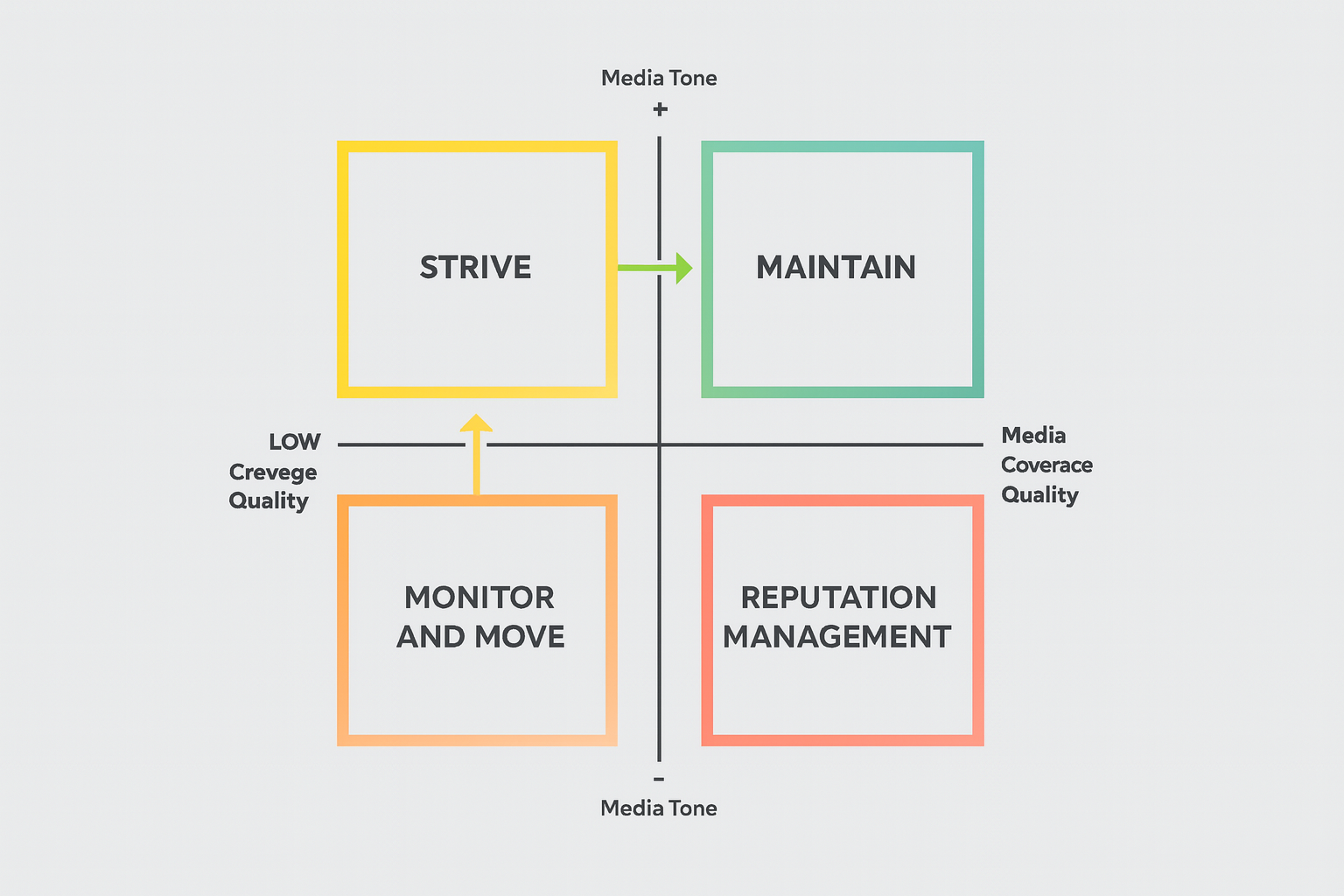
Your brand’s media coverage quality is directly aligned with public sentiment about it.
Owned Foundations that Build Trust
Your website remains your home base, the place where the truth lives. Keep it fast, secure, and easy to navigate. Publish articles that answer real questions with clarity, not fluff. Make your about page sound like humans, not a legal document. Refresh product pages so they read like a helpful guide rather than a brochure. When your own platform feels credible, every outside mention carries more weight.
Earned Visibility that Compounds
You want reputable outlets to talk about you because third-party validation still moves hearts as well as minds. Pitch stories with a newsworthy angle, not a sales pitch. Offer data, explain a trend, or provide a thoughtful perspective that helps a journalist complete the picture. Make life easier for editors with clear quotes, transparent sources, and crisp facts. The reward is coverage that reaches new audiences and sits high in search results for months.
Search Signals that Strengthen Rankings
Modern search favors entities, expertise, and helpful content. When respected sites cite your work, link to your resources, or feature your spokespeople, search engines connect the dots. Your brand benefits from improved authority, which lifts the pages that matter most. Pair that with clean technical hygiene, descriptive metadata, and content written for actual readers. Your chances of appearing at the exact moment of intent go up.
Social Proof that Converts
People believe people. Build a steady stream of testimonials, creator collaborations, and authentic reviews. Repurpose the best quotes in marketing materials and on key landing pages. Encourage employees to share expertise on their preferred platforms with guidelines that protect the brand while letting personality through. When prospects see consistent signals from many angles, the path to purchase feels safe rather than risky.
How It Protects Your Brand When Things Go Sideways
Even the most careful team will face a storm sooner or later. A shipping delay, a pricing mix-up, a misunderstood change in policy, all can snowball in a weekend. The best defense is a reservoir of goodwill built over time. If people have seen your helpful articles, your interviews, and your timely responses, they will give you the benefit of the doubt while you fix the problem.
Preparation matters. Draft holding statements for likely scenarios, list your spokespeople, and keep media contacts current. Decide who approves what, because in a crunch, minutes count. Set up listening so alerts fire quickly when conversation spikes. When you respond with empathy, accuracy, and clear next steps, you turn a headache into proof that your company keeps its promises.
After the dust settles, publish a recap that explains what happened and what changed. Thank customers for their patience. Close the loop where the conversation started. The goal is not to erase a rough moment. The goal is to demonstrate reliability in public, which is the real asset of a modern brand.
Metrics that Actually Matter in 2025
Visibility You Can Feel
Do not chase vanity numbers. Track the volume and quality of brand mentions across respected publications and platforms. Watch how often your resources are cited by others. Look for growth in impressions where your core buyers spend time. You want to see a steady rhythm of exposure, not a single spike followed by silence.
Authority that Lifts Everything
Authority is not a mystical score. It is a reflection of how trustworthy and connected your brand appears across the web. Monitor the number of unique referring domains, the caliber of those domains, and the context of the links. Pay attention to how your content ranks for difficult queries over time. When authority goes up, paid spend becomes more efficient and organic growth gets easier.
Engagement that Signals Real Interest
Track the behavior that shows intent. Longer time on page for thought pieces, higher reply rates to outreach, more saves and shares for educational posts, and contact forms completed after reading a useful resource. These are the breadcrumbs that indicate prospects view you as a dependable guide rather than a loud advertiser.
Revenue Impact You Can Explain
Tie your efforts to pipeline and sales without pretending every click deserves a parade. Use assisted conversion reporting to see how earned coverage and helpful content influence the path to purchase. Look for shortened sales cycles, better close rates in educated segments, and lower customer acquisition costs over time. Present the story in clear language that finance teams can validate.
Practical Steps to Get Started This Quarter
Begin with a clear narrative. Write a one-page brand story that explains who you serve, the change you make, and the proof that you can deliver. Share it with your team so interviews, articles, and product pages sound like the same company. Consistency multiplies your reach because every mention reinforces the last one.
Next, map the places your buyers go to learn. Identify the publications they trust, the communities they visit, and the creators they already follow. Study the tone, the timelines, and the formats that perform well there. Then craft pitches and content that fit the room. Your message should feel native to the channel without losing your voice.
Create a calendar that balances quick wins with durable assets. Ship a helpful explainer this week, a research-backed article next week, and an interview the week after. Record a short video that distills a bigger idea for people who prefer to watch rather than read. Repurpose each asset into smaller pieces that travel farther. Momentum beats perfection.
Finally, keep your response muscles strong. Decide who replies to incoming media requests, who monitors mentions, and who updates key pages when news breaks. Save time with templates for common questions, then personalize clearly to sound human.
Common Mistakes to Avoid
Spray-and-pray outreach burns goodwill fast. Do not pitch everyone with the same message. It is better to build a short list of right-fit reporters and creators and offer them something genuinely useful. Likewise, do not chase trends (like the latest craze to use generative AI in PR) that do not fit your brand. A borrowed costume looks clever for a day and awkward for a year.
Another trap is neglecting measurement. If you cannot explain what worked, you will repeat the loudest tactic, not the most effective one. Set goals, review them on a schedule, and retire from busywork that does not move a meaningful metric. Leave room for experiments, then double down on the ones that prove themselves.
Last, resist the urge to sound like a robot. Jargon hides real meaning and drains trust. Write the way you would talk to a smart friend. Keep sentences tight, steer clear of puffery, and let a little personality through. People notice when a brand sounds like people.
Conclusion
The brands that thrive in 2025 will not rely on chance. They will publish useful ideas, earn credible attention, answer questions quickly, and measure what actually matters so they can do more of it. Put a clear plan in place, give it consistent care, and let your voice sound like real people who know their craft.
Do that, and the noisy scroll turns into a stage where your expertise is obvious, your promises are believable, and your growth feels steady rather than streaky.
Get with PR.Digital about your next digital PR campaign!
How Digital PR Fuels SEO and Organic Growth
Scroll back a decade and the path to page-one visibility was mostly a technical grind—optimize title tags, pepper in keywords, earn a few directory links, and hope for the best. Today that playbook looks painfully thin. Audiences crave stories, journalists want data they can cite, and search engines have grown smart enough to reward brands that are talked about naturally across the web.
Digital PR now sits at the center of that modern mix. By blending the storytelling craft of traditional public relations with the reach and measurement precision of digital marketing, Digital PR turns brand chatter into organic search power.
What Digital PR Really Means for SEO
From Press Releases to Shareable Stories
Traditional PR leaned heavily on press releases and one-off coverage. Digital PR still values earned media but expands the canvas: interactive data pieces, thought-leadership articles, expert quotes, social initiatives, and podcasts all count toward the same goal—credible mentions in places people actually read. Each mention is more than feel-good publicity; it becomes a crawlable, indexable signal that search engines use to gauge authority.
Bridging the Gap Between Brand and Search Engine
Google’s algorithm has matured from counting links to understanding entities—the who, what, and why behind a brand. When respected publishers cite your company, they help a search engine connect those dots. That bridge lifts topical authority, boosts trust, and ultimately improves keyword rankings for pages you haven’t even optimized yet. In other words, Digital PR shortens the distance between brand awareness and organic reach.
The SEO Domino Effect of a Well-Executed Digital PR Campaign
Authoritative Backlinks That Search Engines Trust
A single backlink from a Tier-1 publication can outweigh dozens of lesser citations. That’s because major outlets have rigorous editorial standards, strong domain authority, and expansive readership. When they link to your site:
- Google interprets the link as a vote of confidence.
- Crawl bots revisit your pages more frequently, speeding up indexation of new content.
- Referral traffic from an engaged audience arrives with metrics—time on page, low bounce rate—that reinforce SEO signals.
Brand Mentions and Entity Recognition
Even unlinked mentions move the needle. Natural Language Processing allows engines to recognize brand names and co-occurring keywords. As mentions accumulate, Google’s Knowledge Graph fills in the blanks, associating your brand with industry topics, products, and thought leadership themes. Rankings for semantically related queries often improve as a by-product.
Engagement Signals That Boost Relevancy
Digital PR campaigns tend to spark social shares, comments, and inbound visits. Those users spend time reading a data study, watching an explainer video, or scrolling through an interactive map. Engaged behavior sends relevance cues—dwell time, scroll depth—that layer on top of link authority. It’s the domino effect in action: storytelling drives engagement, engagement feeds SEO signals, and SEO wins pull in even more traffic.
Building a Digital PR Strategy Geared Toward Organic Growth
Start With Data, Not Assumptions
Successful campaigns rarely begin with “What cool thing can we say?” They start by mining data: proprietary stats, customer surveys, or publicly available government numbers. Data sets act as raw material for stories that journalists actually want. Before drafting a headline, ask: does this insight surprise, confirm, or challenge something meaningful in the industry?
Craft Stories Journalists Actually Want
Think of reporters as time-starved curators. They need:
- A clear, timely angle that dovetails with their beat.
- Credible evidence—original data, expert commentary, or compelling human anecdotes.
- Ready-to-use assets such as charts, tables, or high-resolution visuals.
Package those elements up front, and your pitch shifts from “please feature us” to “here’s a resource that will help your readers.”
Amplify Through the Right Channels
Earned media is the engine, but amplification is the fuel additive. Once a story lands:
- Promote the coverage on owned channels—blog, newsletter, social—to extend its lifespan.
- Use paid social micro-budgets to nudge high-value audiences toward the article.
- Encourage internal subject matter experts to comment and share, adding credibility while widening reach.
Each amplification loop creates more touchpoints, sparking additional mentions and links that feed back into search performance.
Measuring Success—What Matters Beyond Vanity Metrics
SEO KPIs to Watch
Digital PR can feel intangible if you only track impressions. Layer in search-focused metrics to see the real impact:
- Growth in referring domains and link quality (Trust Flow, Domain Rating).
- Ranking improvements for target keywords and related topical clusters.
- Increase in non-branded organic traffic and click-through rates.
- Faster indexation times for new content following major coverage.
PR Metrics That Complete the Picture
Organic gains often lag a few weeks behind a campaign, so short-term PR metrics help gauge momentum:
- Total media placements and average domain authority.
- Social shares and engagement per placement.
- Sentiment analysis from article comments and social chatter.
Cross-referencing these numbers with your SEO dashboard paints a fuller picture of brand authority in both the human and algorithmic sense.
Common Pitfalls and How to Dodge Them
Chasing Links Over Relevance
A link from an irrelevant site can do more harm than good. Search engines notice topical mismatch and may discount or even penalize forced placements. The fix is simple: vet every opportunity for relevancy first, authority second, and link attributes third. If the audience doesn’t overlap with your buyer persona, move on.
This is often done by folks who favor scale over human interaction, using AI too heavily in digital PR.
Neglecting the Technical SEO Foundation
Digital PR can drive a surge of traffic, but that wave will crash if your site loads slowly, serves broken pages, or lacks structured data. Before launching a campaign, run an audit: ensure crawlability, optimize Core Web Vitals, and map out logical internal links from new coverage pages to key conversion URLs. Think of technical SEO as the runway—without it, your PR plane never fully takes off.
Final Thoughts
Digital PR is not a bolt-on tactic; it’s the connective tissue between storytelling and search visibility. By earning authoritative coverage, sparking authentic engagement, and feeding rich signals into search algorithms, your brand gains the sort of compound interest that traditional link building rarely matches.
When you weave data-driven narratives and meticulous outreach into a solid technical foundation, organic growth becomes more than a vanity metric—it becomes the natural outcome of being genuinely useful and consistently cited in the places your audience trusts.